Modi-Trump Phone Call Clarifies India’s Firm Stand on Kashmir
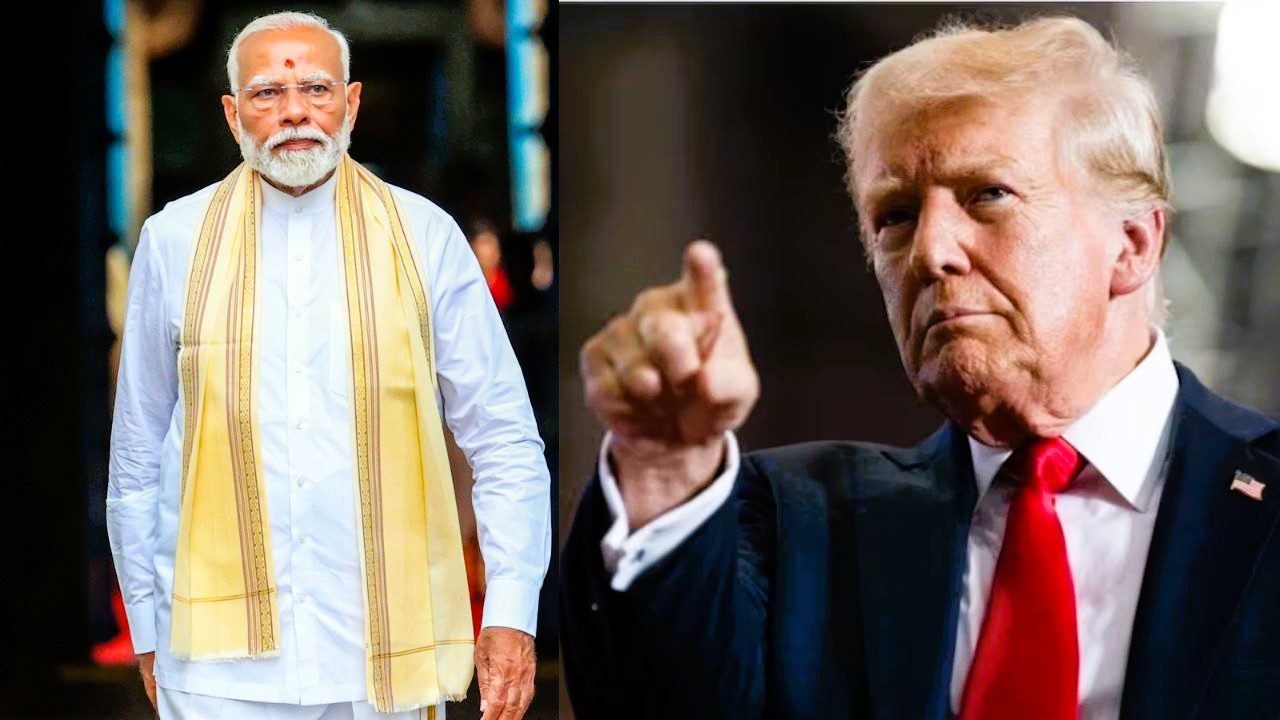
In a significant development, the Modi-Trump phone call on June 17 reaffirmed India’s unchanging policy on the Kashmir issue. Prime Minister Narendra Modi told US President Donald Trump that India has never accepted and will never accept third-party mediation on Jammu and Kashmir, especially concerning Pakistan’s illegal occupation of the region.
Foreign Secretary Vikram Misri briefed the media the following day, clarifying the details of the 35-minute conversation. The call was initiated by President Trump while PM Modi was attending the G7 Summit in Canada. During the discussion, Trump sought clarity on Operation Sindoor, India’s military retaliation to the April 22 Pahalgam terror attack in which 26 civilians, mainly tourists, lost their lives. 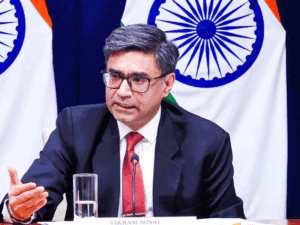
India’s Measured Response to Terror
In the Modi-Trump phone call, PM Modi explained that India’s response was “measured,” precisely targeting terror camps in Pakistan and Pakistan-occupied Kashmir. He emphasized that India’s military action was not intended to escalate tensions but to dismantle terror infrastructure.
Importantly, PM Modi underlined that any future dialogue with Pakistan would only focus on two issues: terrorism and the return of Indian territory. He reiterated a statement he had made earlier on May 12: “If we ever talk to Pakistan, it will be on terror and PoK only.”
Modi-Trump Phone Call Denies Mediation and Trade Deal Talk
Contrary to repeated claims by Trump that he helped broker a ceasefire after Operation Sindoor, India made it clear that no such mediation occurred. Foreign Secretary Misri stated, “PM Modi clearly told President Trump that at no point, and at no level, was there any talk of US mediation or a US-India trade deal.”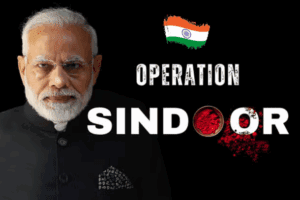
He further clarified that any discussion regarding cessation of hostilities was initiated by Pakistan and handled through pre-established military communication channels between India and Pakistan.
A Parallel US-Pakistan Development
The Modi-Trump phone call also gained importance due to its timing. It occurred just ahead of a scheduled meeting between Trump and Pakistan’s Army Chief, General Syed Asim Munir, in Washington. Munir, facing criticism in India for his extremist comments post Pahalgam attack, joined Trump for a lunch at the White House on the same day.
This meeting sparked strategic concerns, especially amid growing tensions in West Asia, with the potential for a regional conflict involving Iran and Israel, both of which share interests with Pakistan.
US Visit Invite Declined, QUAD Invitation Extended
During the Modi-Trump phone call, President Trump extended an invitation to Modi to visit the United States after his G7 engagements. However, PM Modi declined, citing prior commitments. Instead, he invited Trump to visit India for the upcoming QUAD Summit, a proposal Trump accepted, though without confirming his attendance.
Modi-Trump Phone Call Sets Diplomatic Boundaries
The Modi-Trump phone call reinforced India’s consistent and bipartisan stance on Kashmir: no foreign mediation, only bilateral dialogue focused on counter-terrorism and reclaiming occupied territory. By firmly denying Trump’s claims and trade deal rumors, Modi ensured clarity in India’s diplomatic messaging while preserving sovereignty and regional integrity.
About the Author